
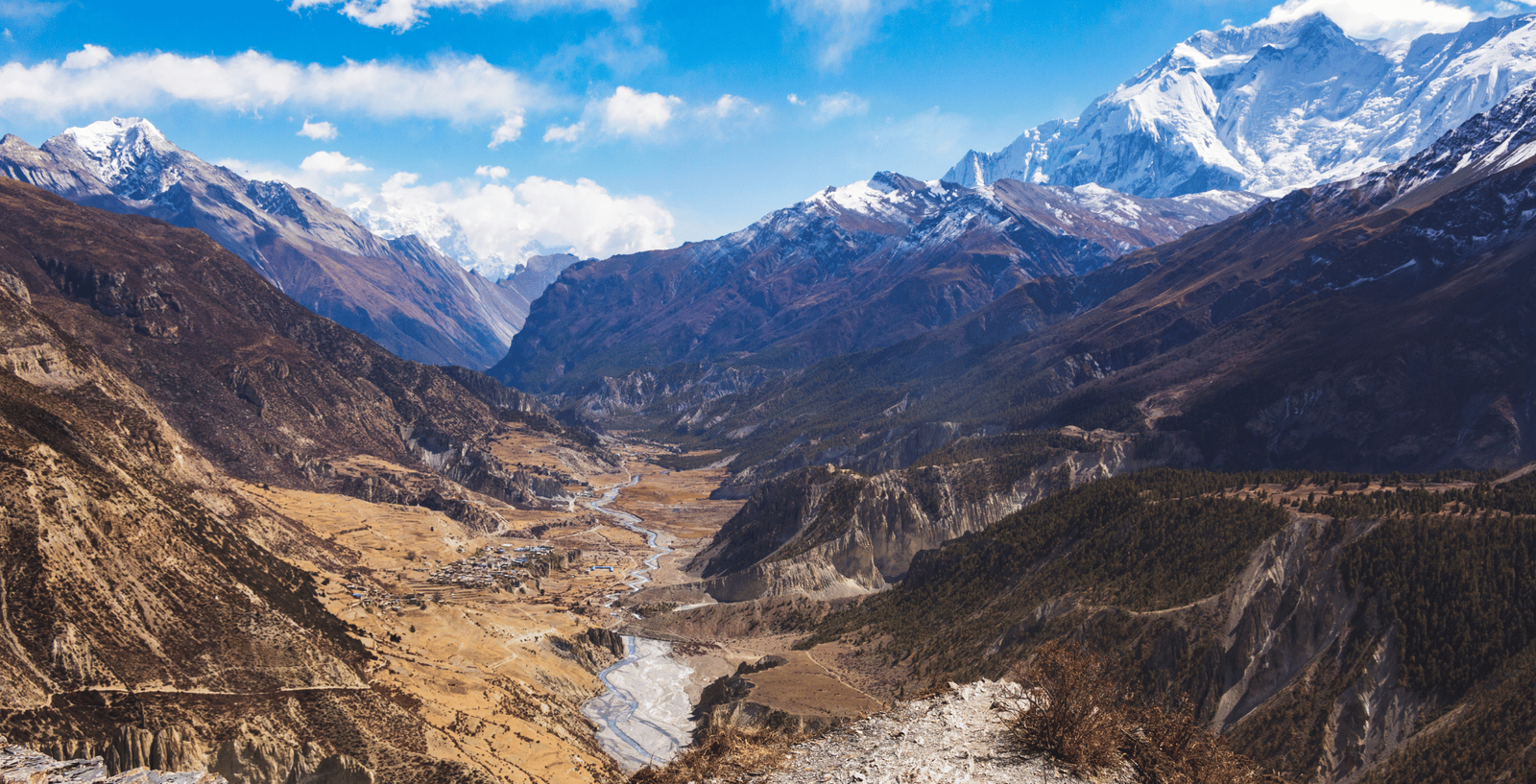
Towering white peaks, ancient Buddhist prayer flags, and rhododendron forests so pink they look like a filter. But here’s the thing about the Annapurna region—it’s not just for hardcore mountaineers.
The Annapurna region offers something rare: world-class adventure with teahouse comfort. You don’t need to carry a tent or freeze in a snow cave. You walk from village to village, sleep in cozy lodges, and eat hot dal bhat.
According to the Nepal Tourism Board (2024 report), the Annapurna Conservation Area is the most popular trekking destination in Nepal, hosting over 60% of all trekkers. Why? Because it’s accessible, affordable, and absolutely jaw-dropping.
Below, we’ve hand-picked 10 hikes—from short two-day walks to two-week adventures—based on scenery, safety, accessibility, and cultural value.
Annapurna Base Camp Trek (ABC) – The Classic Bowl
Why it’s here: This is the hike that dreams are made of. You literally walk into a natural amphitheater surrounded by Annapurna I, Machapuchare (the “Fishtail”), and Hiunchuli.
- Duration: 7–10 days
- Max altitude: 4,130 m (13,550 ft)
- Best for: First-time high-altitude trekkers
Practical tip: Go in October or April. The trail is busy, but the teahouses are reliable. Bring earplugs—the glacial icefall cracks loudly at night.
Data point: A 2023 study by PLOS ONE found that ABC has one of the lowest acute mountain sickness (AMS) rates among high treks due to its gradual ascent profile.
Suggested internal link: “What to Pack for a 7-Day Teahouse Trek”
External authority link: Annapurna Conservation Area Project (ACAP) – official trail updates (Anchor: ACAP official trekking updates)
Poon Hill Sunrise Trek – The Short & Sweet Postcard
Why it’s here: You want the “wow” without the “ow.” This is a 2–3 day hike perfect for weekend warriors or as a warm-up.
- Duration: 2–3 days
- Max altitude: 3,210 m (10,531 ft)
- Best for: Families, time-crunched travelers
Actionable advice: Leave Ghorepani at 4:30 AM. Yes, it’s early. But watching the sunrise turn Dhaulagiri and Annapurna South into liquid gold is worth the coffee.
Expert note: Many guides skip Poon Hill for longer treks, but we recommend it as an acclimatization loop before ABC.
Suggested internal link: “Altitude Acclimatization: A Step-by-Step Guide”
External authority link: CDC High-Altitude Travel Advice (Anchor: CDC altitude safety tips)
Mardi Himal Trek – The Quiet Underdog
Why it’s here: Tired of crowds? Mardi Himal is ABC’s shy cousin. You’ll hike through mossy forests and then pop out directly across from Machapuchare’s south face.
- Duration: 4–5 days
- Max altitude: 4,500 m (14,764 ft)
- Best for: Solitude seekers and photographers
Data: According to Himalayan Database, Mardi Himal saw only 12% of ABC’s traffic in 2023, meaning you get the same mountains with 88% fewer selfie sticks.
Suggested internal link: “How to Choose Between ABC and Mardi Himal”
External authority link: The Himalayan Database – Trekking Statistics (Anchor: official Himalayan trekking stats)
Annapurna Circuit (via Thorong La) – The Epic Journey
Why it’s here: This is the full meal deal. You cross a 5,416 m (17,769 ft) pass, walk through apple orchards in Manang, and descend into the Kali Gandaki gorge (the world’s deepest).
- Duration: 12–16 days
- Max altitude: 5,416 m
- Best for: Experienced trekkers with 2+ weeks
Important note: Road construction has shortened the original circuit, but the Manang to Muktinath section remains world-class. Rent a Jeep to skip the dusty road walks.
Suggested internal link: “Annapurna Circuit vs. Everest Base Camp: Which is Right for You?”
External authority link: UK Foreign Office – Nepal Trekking Safety (Anchor: UK government Nepal travel advice)
Khopra Ridge Trek – The Off-the-Map View
Why it’s here: Most people stop at Ghorepani. You shouldn’t. Khopra Ridge gives you a near-vertical view of Dhaulagiri without the crowds.
- Duration: 5–6 days
- Max altitude: 3,660 m (12,007 ft)
- Best for: Hikers who want “local homestay” vibes
Practical tip: Stay at the Khopra Community Lodge. It’s run by a women’s cooperative, and the proceeds go directly to local schools.
Actionable data: A 2024 Sustainable Tourism Nepal report found that community lodges retain 3x more trekking revenue in villages than foreign-owned teahouses.
Suggested internal link: “Supporting Local Economies While Trekking”
External authority link: Sustainable Trekking Alliance – Nepal Report (Anchor: sustainable trekking research)
Mohare Danda – The Eco-Trekker’s Choice
Why it’s here: Less famous than Poon Hill, but arguably better. Mohare Danda is part of a “community-based eco-trekking” network.
- Duration: 4–5 days
- Max altitude: 3,300 m
- Best for: Eco-conscious travelers
Why it’s special: The lodges here use solar power and composting toilets. You’ll also get panoramic views of Annapurna South and Dhaulagiri without the Ghorepani crowds.
Conversational truth: Yes, the lodges are more basic. No, you won’t care when you see the sunset.
Suggested internal link: “Eco-Friendly Packing List for the Himalayas”
External authority link: UNWTO – Community-Based Tourism in Nepal (Anchor: UNWTO community tourism case study)
Nar Phu Valley Trek – The Hidden Kingdom
Why it’s here: This requires a special permit, and that’s a good thing. You’ll walk through ancient Tibetan-style villages, cave monasteries, and narrow canyons.
- Duration: 10–12 days
- Max altitude: 5,320 m (Kang La Pass)
- Best for: Culture + adventure hikers
Expert insight: Nar Phu is technically in the Annapurna region, but it feels like a different planet. You’ll need a guide (required by local law), so budget $25–35/day extra.
Data point: Only 4,500 trekkers visited Nar Phu in 2023 (Nepal Immigration), compared to 45,000+ at Poon Hill.
Suggested internal link: “Why Hiring a Local Guide is Safer and Smarter”
External authority link: Nepal Tourism Board – Restricted Area Permits (Anchor: official restricted area permit rules)
Ghorepani to Ghandruk Loop – The Cultural Walk
Why it’s here: Two classic villages, one incredible 3-day loop. You’ll walk through Gurung and Magar homelands, see traditional roundhouses, and finish in Ghandruk (home to many Gurkha soldiers).
- Duration: 3–4 days
- Max altitude: 2,800 m
- Best for: Culture lovers and moderate hikers
Actionable tip: In Ghandruk, visit the Gurung Museum. It’s small but packed with real WWII Gurkha kukri knives and oral history recordings.
Suggested internal link: “Meeting the Gurung People: Etiquette and Respect”
External authority link: BBC – Who are the Gurkhas? (Anchor: BBC history of Gurkha soldiers)
Tilicho Lake Trek – The High-Altitude Mirror
Why it’s here: This is often done as a side trip from the Annapurna Circuit. Tilicho Lake is one of the highest lakes in the world (4,919 m / 16,138 ft).
- Duration: Add 3–4 days to Circuit
- Max altitude: 4,919 m at lake (plus 5,416 m pass later)
- Best for: Adventurers comfortable with altitude
Warning: The trail to Tilicho has a section called the “Mesokanto La” landslide zone. It’s exposed and loose. Go early morning before winds pick up. Do not attempt after rain or snow.
Suggested internal link: “Altitude Sickness: Symptoms, Prevention, and Evacuation”
External authority link: International Society for Mountain Medicine – AMS Guidelines (Anchor: medical guidelines for altitude)
Jomsom to Muktinath – The Spiritual Finish
Why it’s here: This is a short, 2-day hike that’s actually the end of the Annapurna Circuit. Muktinath Temple is sacred to both Hindus and Buddhists.
- Duration: 2 days
- Max altitude: 3,800 m (Muktinath)
- Best for: Pilgrimage and recovery hiking
Practical tip: Fly from Pokhara to Jomsom (25 minutes, scenic as hell), then hike to Muktinath. You’ll pass through Kagbeni, a forbidden kingdom until 1992.
Data: A 2024 Journal of Heritage Tourism study ranked Muktinath as the #1 most spiritually significant trekking destination in the Himalayas.
Suggested internal link: “Spiritual Trekking: A Beginner’s Guide”
External authority link: UNESCO – Muktinath Valley (Anchor: UNESCO Muktinath information)
FAQs
Do I need a guide for Annapurna hikes?
No, but we strongly recommend one. Guides cost $20–30/day and handle permits, lodging, and emergencies. Plus, you’re supporting local employment. For Nar Phu, a guide is legally required.
What’s the best month for clear skies?
October to November (post-monsoon) and March to April (pre-monsoon). December is cold but crystal clear. July is rainy—clouds will steal your views.
How fit do I need to be?
For Poon Hill? Moderate fitness (you can walk 4–6 hours uphill). For Thorong La? You should be training with stairs or a stair climber 3 months in advance.
Is it safe for solo female travelers?
Yes, with precautions. The Annapurna trail is well-traveled and locals are respectful. But always stay in teahouses with other trekkers, share a porter/guide, and trust your gut. We’ve guided many solo women here safely.
What about altitude sickness?
Very real. The rule: above 3,000 m, don’t gain more than 300–400 meters per day for sleeping elevation. Diamox (acetazolamide) is available in Kathmandu. If you have symptoms, descend. Never “push through.”
How much does an Annapurna trek cost?
For a 10-day trek: Permits ($50–70), teahouse lodging ($10–20/night), food ($15–25/day), guide/porter ($25–35/day). Total: $500–800 excluding flights. Cheaper than most US or European ski weeks.
Conclusion
Let’s recap. The Annapurna region gives you:
- World-class mountain views without mountaineering gear
- Teahouse comfort (beds, hot meals, even WiFi in some villages)
- Flexibility—from 2-day Poon Hill to 16-day full Circuit
- Incredible cultural immersion with Gurung, Thakali, and Tibetan communities
You don’t need to be an Olympian. You just need decent boots, a sense of adventure, and respect for the mountains.
Ready to start planning?
👉 Download our free Annapurna Packing Checklist (link to newsletter signup)
👉 Read next: “Annapurna vs. Everest: Which Trek is Right for You?” (internal link)
👉 Have questions? Drop a comment below—I personally reply to every Trekker’s Corner reader.