
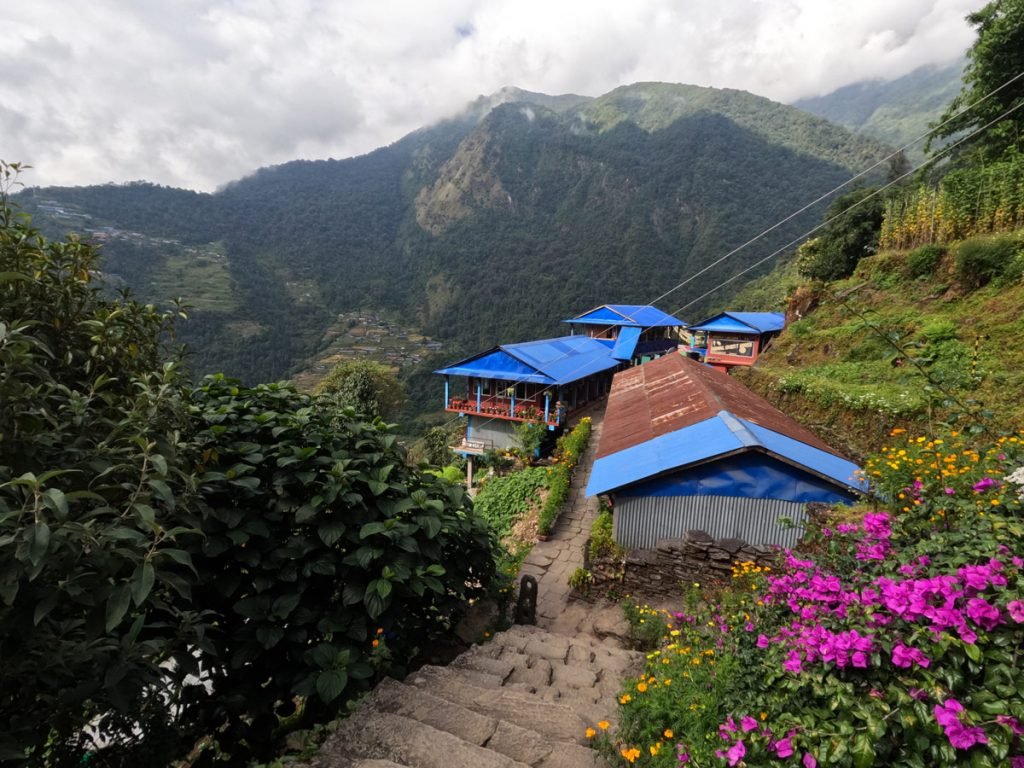
One of Nepal’s most famous trekking routes is set for a major upgrade after the national electricity grid reached Upper Sinuwa, bringing a more reliable power supply to a key section of the Annapurna Base Camp (ABC) trail.
The Nepal Electricity Authority (NEA) has extended the transmission line from Jinudanda to Upper Sinuwa in Ward No. 11 of Annapurna Rural Municipality as part of a government initiative to improve electricity access in major tourism areas of Kaski.
For years, communities along the route depended on micro-hydropower and alternative energy sources. The arrival of the national grid is expected to improve services for residents, lodge operators and thousands of trekkers visiting the region each year.
Local tourism entrepreneurs say the change will make a significant difference.
Jagdish Gurung, who has operated a hotel in Jinu for the past two decades, welcomed the development.
“It is a matter of great happiness for us. Reliable electricity will significantly improve tourism services and benefit local businesses,” he said.
Around 60 to 70 hotels of different sizes operate between Jinudanda and Upper Sinuwa, according to local hoteliers.
Mikash Gurung, a hotel owner from Chhomrong, said stable electricity would allow businesses to provide better facilities to visitors, including mobile charging, hot water, internet access and other essential services.
“The national grid had not previously reached areas above Ghandruk Bus Park. The line has now been extended to Upper Sinuwa, and local residents have already started installing electricity meters,” said Sajibshree Ramtel, an engineer at the NEA’s Pokhara Distribution Centre.
The new electricity supply has already started flowing through the extended line from Ghandruk Bus Park to Jinu and from Chhomrong to Upper Sinuwa.
The project, first tendered in 2079 BS, faced delays after the initial contractor failed to sign the agreement. A second tender was later issued, and BNR Mahalaxmi JV of Dhankuta completed the work under a labour contract worth Rs 22 million.
Building the line in the remote Himalayan landscape proved challenging. The NEA said poles, transformers and other equipment had to be transported by helicopter, especially in areas beyond Chhomrong.
According to Ramtel, trekkers previously struggled with charging electronic devices, accessing hot water and using internet services along the route. The new grid connection has helped solve many of those problems.
The authority plans to continue expanding electricity access towards higher settlements along the ABC trail next fiscal year. Work has temporarily stopped due to a shortage of construction materials but is expected to resume.
Annapurna Rural Municipality-11 Chairperson Him Bahadur Gurung said improved electricity access would strengthen tourism in the area.
“Trekkers will no longer face difficulties accessing basic communication and other essential services during their journey,” he said.
The upgrade comes as the Annapurna Conservation Area experiences a record rise in international visitors.
The Annapurna Conservation Area Project (ACAP) recorded 441,422 foreign tourists by the end of the current fiscal year, compared with 278,113 during fiscal year 2081/82.
ACAP Chief Dr. Rabin Kadariya said visitor numbers are expected to rise further with one month remaining in the fiscal year.
“The number of tourists from South Asian countries, particularly India, increased by nearly 300 percent in the month of Jestha alone,” he said. “This is the first time we have witnessed such a significant influx of Indian visitors.”
He linked the growth to stronger tourism promotion, improved transport links and wider exposure through social media. Many Indian visitors have also been travelling to Pokhara and nearby destinations to escape extreme summer heat.
ACAP data shows that 319,419 visitors recorded by the end of Jestha were from South Asian countries, while 121,993 came from other international destinations.
In Jestha alone, the region welcomed 127,459 visitors, a sharp rise from 31,955 during the same period last year.
Hotel Association Pokhara President Laxman Subedi said hotel occupancy in Pokhara reached around 90 percent during April and May.
The Annapurna region continues to attract trekkers with world-famous destinations including Annapurna Base Camp, Mardi Himal, Ghandruk, Tilicho Lake, Thorong La Pass, Upper Mustang, Muktinath and Ghorepani.
Covering 7,600 square kilometres across Kaski, Lamjung, Manang, Myagdi and Mustang districts, the Annapurna Conservation Area is known for its dramatic mountain scenery, diverse wildlife, cultural heritage and internationally recognised trekking routes.
With improved infrastructure and growing visitor numbers, locals believe the Annapurna region is entering a new phase of tourism development.