
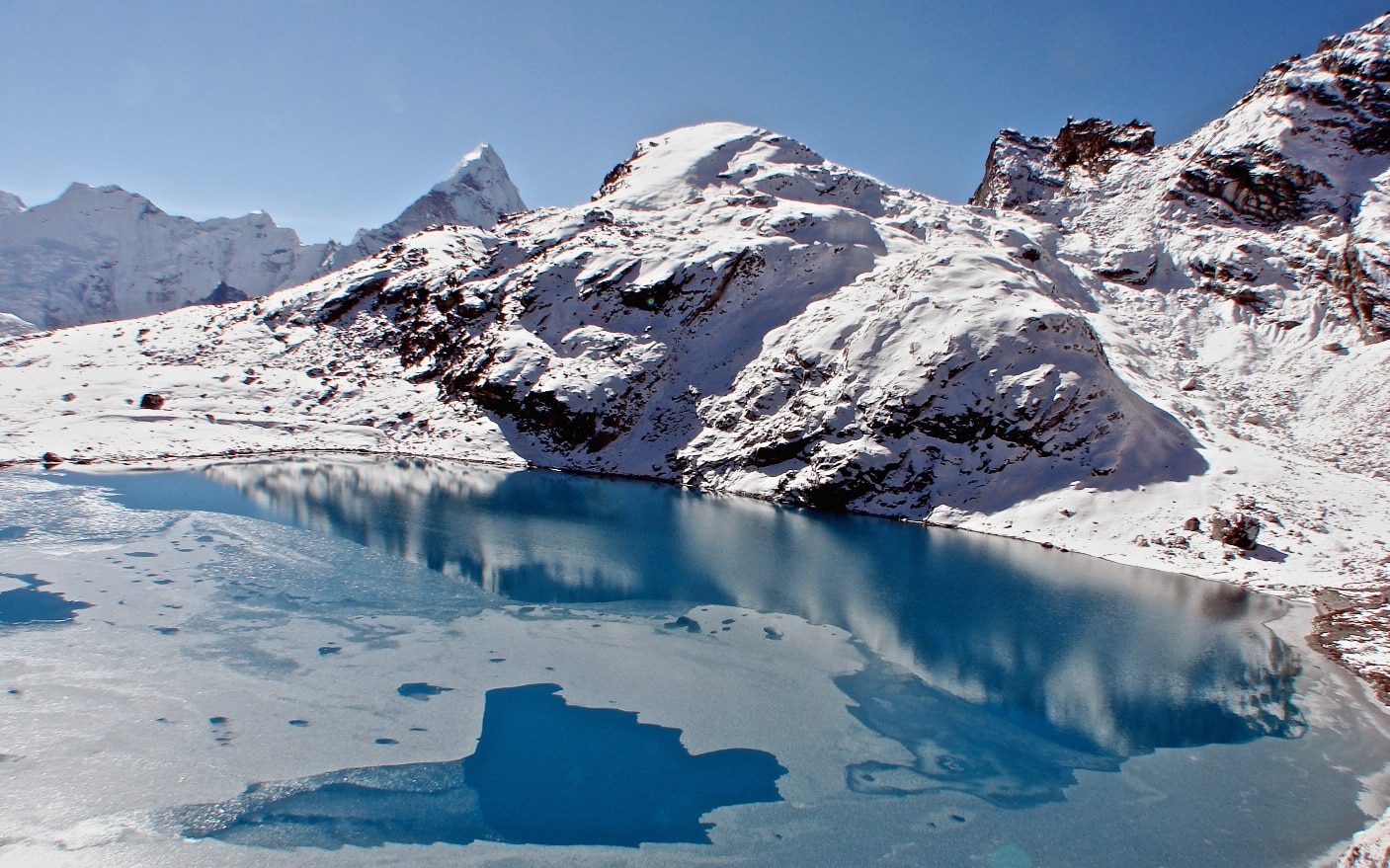
An early flood warning system intended to protect thousands of residents in Nepal’s Everest region has fallen into disrepair and may no longer be functional, officials have acknowledged in remarks to the BBC.
The admission follows concerns raised by Sherpa communities, who reported that the UN-supported system has not been inspected for years. The system was originally installed after mitigation work at the potentially dangerous Imja glacial lake was completed in 2016.
Local residents report that no maintenance has been carried out since then. As a result, siren towers have deteriorated, with some structures rusting and leaning, while others have reportedly had their batteries stolen. Officials at Nepal’s Department of Hydrology and Meteorology (DHM) also confirmed that the satellite-based system used to transmit lake-level data—critical for issuing mobile alerts—has been unreliable.
Imja Lake, situated at an altitude of just over 5,000 meters (16,400 feet), has not overflowed since it was partially drained nearly a decade ago. At the time, the lake was reduced by approximately 3.5 meters in depth under a $3.5 million risk reduction initiative that included installation of the early warning system.
However, scientists warn that climate change is accelerating glacier melt across the Himalayas, causing glacial lakes to expand and increasing the risk of sudden outburst floods. A recent assessment by the International Centre for Integrated Mountain Development found that ice loss rates in the Hindu Kush Himalaya region have doubled since 2000.
Experts say rising temperatures are also destabilizing mountain terrain, leading to rockfalls and glacial collapses that can trigger catastrophic flooding. In the Everest region alone, at least five such floods have been recorded over the past 50 years.
Communities downstream of Imja Lake say they are increasingly concerned about their safety.
“Going by the state of the siren towers, we don’t expect to get any flood warning from them even when Imja lake bursts out,” said Ang Nuru Sherpa, chairman of the Chaurikharka buffer zone adjoining Sagarmatha National Park.
“The siren tower in our village is rusting and leaning and is set to fall any time because there has never been any maintenance.”
Residents also expressed frustration over the lack of official follow-up.
“When the project was commissioned, we were told officials from the department of hydrology and meteorology will be visiting the region every year to inspect the system, but we see no one coming here,” said Jangbu Sherpa of Chhukung, the first village that would be affected by a potential outburst.
“So, we go to the DHM in Kathmandu every year to request them to repair and maintain the early warning system but that has been of no use.”
Local organizations have echoed these concerns, warning that the risk extends beyond residents to the large number of visitors to the region.
“Six villages in the region are vulnerable to floods and so are the more than 60,000 tourists who visit our region every year,” said Tshering Sherpa, chief executive of the Sagarmatha Pollution Control Committee.
Government officials acknowledge the risks but cite funding constraints. Niraj Pradhananga, a senior meteorologist at DHM, said no budget has been allocated for maintenance, and proposals to involve hydropower companies downstream have not materialized.
“As a result, we cannot say for sure if the early warning sirens work or they don’t,” he told the BBC.
“We have heard that batteries of the siren system have been stolen in [downstream villages] like Dingboche.”
DHM’s acting director general, Archana Shrestha, said resources had recently been diverted to upgrade a warning system at another glacial lake.
“That took all our resources and time, now we will move our attention to Imja lake,” she said.
“We are also making changes in rules and regulation so that our staff get enough time, budget and resources to go to the ground and perform maintenance and repair works as the Imja lake is in a remote location.”
Further complicating the situation are ongoing technical issues with the hydrometeorological station responsible for transmitting real-time lake data.
“We have not been receiving data [of the level of lake and any changes] as regularly as we need to and as a result we are unable to issue mobile phone alerts if there is flood.
“We have been raising this with the satellite company and its local service provider,” said Pradhananga.
While the satellite company denied any fault, DHM officials said the local service provider has not responded to their inquiries. The BBC has contacted the provider for comment.
Despite the challenges at Imja, the United Nations Development Programme (UNDP) has secured a $36 million grant to implement similar projects at four additional glacial lakes in Nepal.
Monica Upadhyay, head of communications at UNDP Nepal, said “lessons from Imja” have informed the design of these new initiatives.
“These place stronger emphasis from the outset on long-term sustainability – through clearer institutional arrangements, dedicated financing mechanisms, and partnerships, including with the private sector where appropriate.”
Meanwhile, residents in the Khumbu region say they remain exposed to ongoing risk.
“For us in the Khumbu region, it has just been an eyewash,” said Nawang Thome Sherpa of Phakding.
“They spent millions of dollars in the name of protecting us from potential disaster – but we are having to live with fear of loss of lives and property every day.”